

Tanzania Safari Guide: The Untamed Heart of East Africa
July 21, 2026

Afrishare Trekking & Safaris
Planning a Tanzania safari? Discover the best parks, the Great Migration timeline, insider tips, and why Tanzania remains Africa's most authentic wildlife destination.
Why Tanzania Deserves a Place on Every Traveler's Bucket List
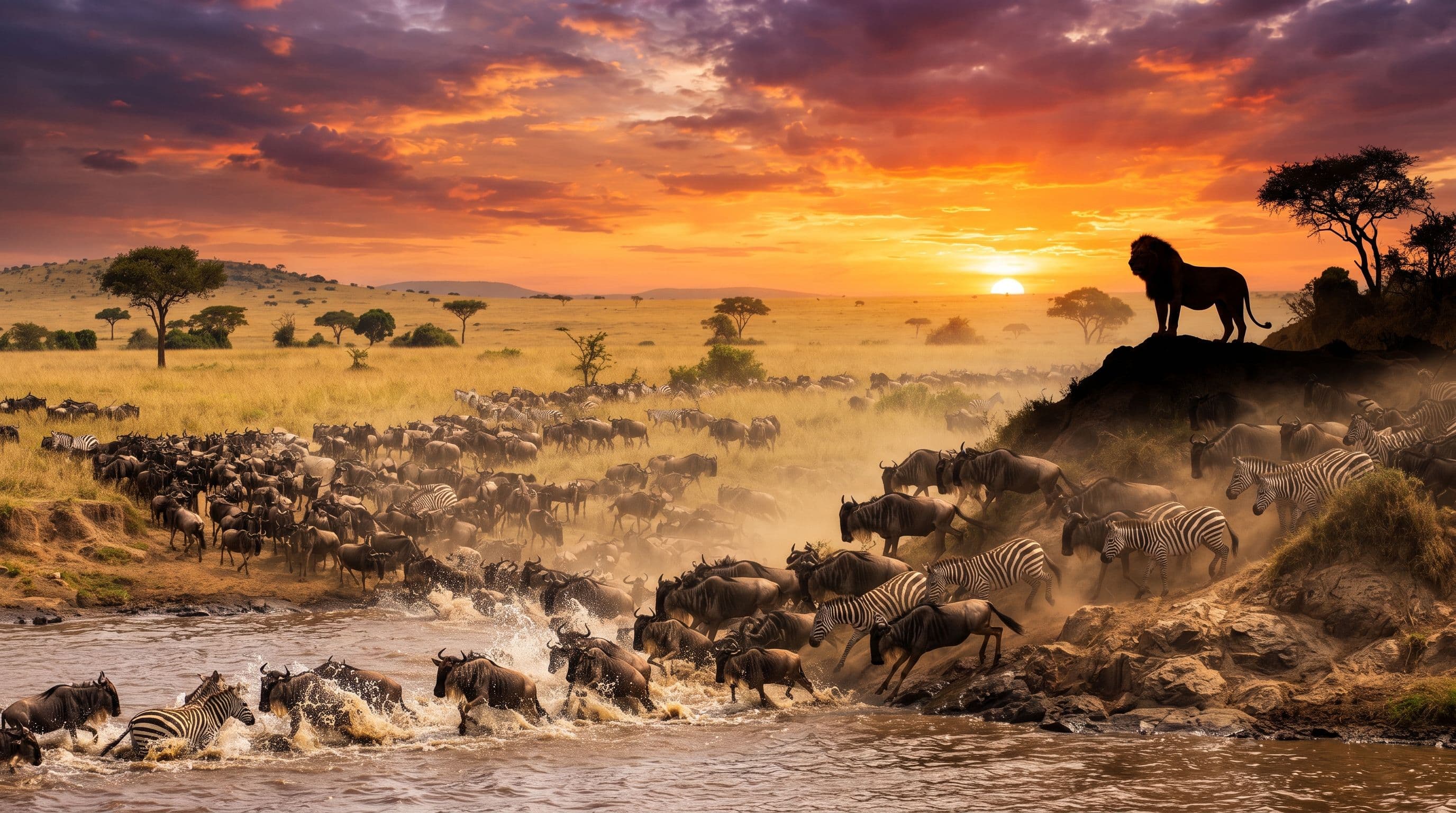
Close your eyes and picture Africa. Chances are, the image in your head — golden savanna stretching to the horizon, a lion silhouetted against a blood-orange sunset, a million wildebeest thundering across a river — was born in Tanzania. This is the country that gave the world the word "safari" (Swahili for "journey"), and it remains the benchmark against which every other wildlife destination is measured.
But Tanzania isn't just about ticking off the Big Five. It's a country of staggering contrasts: the roof of Africa (Mount Kilimanjaro) rising beside the cradle of humankind (Olduvai Gorge), spice-scented alleys in Zanzibar giving way to the endless grasslands of the Serengeti. A safari here isn't a single experience — it's a collection of ecosystems, each with its own rhythm, wildlife, and story.
This guide breaks down everything you need to know to plan a safari that goes beyond the postcard.
The Big Question: When Should You Go on a Tanzania Safari?
Timing your trip around Tanzania's seasons — and the Great Migration — can make or break your experience.
Dry Season (June to October)
This is peak safari season for good reason. Vegetation thins out, water sources shrink, and animals cluster around remaining rivers and waterholes, making sightings easier and more dramatic. It's also when the Great Migration typically reaches the Grumeti and Mara Rivers in the northern Serengeti, delivering the famous (and famously chaotic) river crossings.
Green Season (November to May)
Often overlooked, this period offers lush landscapes, dramatically lower prices, fewer crowds, and incredible birdwatching as migratory species arrive. Calving season (late January to February) is a hidden gem: over 500,000 wildebeest calves are born within a few weeks on the southern Serengeti plains, drawing predators in droves. If you want nature at its rawest, this is it.
SEO tip for travelers: Don't just search "best time for Tanzania safari" — search "Great Migration river crossing calendar" or "Serengeti calving season" to find the exact month that matches the experience you want.
Where to Go: Tanzania's Signature Safari Circuits
1. The Northern Circuit — The Classic Safari
This is where most first-time visitors begin, and for good reason.
- Serengeti National Park: Home to the Great Migration and unmatched predator density. The name itself comes from the Maasai word "siringet," meaning "endless plains."
- Ngorongoro Crater: A collapsed volcanic caldera so fertile it holds one of the highest densities of wildlife on Earth, including one of Tanzania's last populations of black rhino.
- Lake Manyara National Park: Famous for tree-climbing lions and vast flocks of flamingos.
- Tarangire National Park: Baobab-studded landscapes and Tanzania's largest elephant herds, especially striking in the dry season.
2. The Southern Circuit — Wild and Uncrowded
For travelers who want the safari experience without the safari vehicles.
- Nyerere National Park (formerly Selous Game Reserve): One of the largest protected wilderness areas in Africa, best explored by boat safari along the Rufiji River.
- Ruaha National Park: Tanzania's largest national park and a stronghold for lions and wild dogs, with a fraction of the visitor numbers of the north.
3. The Western Circuit — For the Adventurous
- Mahale Mountains and Gombe National Park: Trek through rainforest to observe wild chimpanzees, made famous by Jane Goodall's research at Gombe.
4. The Zanzibar Add-On
No Tanzania safari is complete without pairing it with a few days on Zanzibar's beaches — spice tours, Stone Town's UNESCO-listed alleys, and turquoise water make for the perfect decompression after days of early-morning game drives.
What Makes a Tanzania Safari Different From Other African Safaris
Travelers often ask how Tanzania compares to Kenya, Botswana, or South Africa. A few things set it apart:
- Scale: The Serengeti ecosystem alone spans nearly 30,000 square kilometers, largely undeveloped and unfenced, allowing wildlife to move exactly as it always has.
- The Migration is year-round, not seasonal: Unlike a one-time event, the Great Migration is a continuous circular movement. Tanzania simply hosts more of its stages, including birth and death.
- Cultural depth: The Maasai, Hadzabe, and Datoga communities live alongside these ecosystems, not apart from them. Cultural visits here tend to feel more like an exchange and less like a performance, especially with community-based tourism operators.
- Conservation success stories: Ngorongoro's rhino recovery and Ruaha's growing wild dog population reflect decades of anti-poaching investment that's easy to overlook amid the scenery.
Planning Tips for a Smoother Safari
1. Choose your camp style deliberately. Options range from luxury lodges with infinity pools overlooking the plains to mobile tented camps that move with the migration. Mobile camps in particular offer proximity to the action that fixed lodges can't always match.
2. Budget for internal flights. Tanzania's parks are vast and often far apart. Small-plane transfers between circuits save days of driving and are worth the cost for shorter trips.
3. Pack for temperature swings. Early morning game drives can be surprisingly cold, even near the equator, especially at higher elevations like the Ngorongoro Crater rim. Layers matter more than you'd think.
4. Hire a good guide — it changes everything. The difference between a good safari and an unforgettable one is almost always the guide's knowledge of animal behavior, tracking, and timing.
5. Consider a "walking safari" for a different perspective. Parks like Ruaha and parts of the Serengeti allow guided walking safaris, offering a ground-level understanding of tracks, plants, and smaller creatures that vehicles drive past.
Responsible Safari Travel in Tanzania
Tourism revenue funds a significant share of Tanzania's conservation efforts, but not all operators are equal. Look for camps and tour companies that:
- Employ and train local staff and guides
- Partner directly with Maasai or other local communities on land-use agreements
- Support anti-poaching units financially or logistically
- Follow strict off-road driving and wildlife-viewing distance rules, especially around predators
Choosing responsible operators isn't just an ethical checkbox — it directly protects the very landscapes travelers come to see.
Final Thoughts: A Journey, Not Just a Trip
Tanzania doesn't just show you wildlife — it immerses you in an ecosystem that has functioned, largely undisturbed, for millennia. Whether you're watching a river crossing explode with chaos in the Serengeti, sitting in silence as a leopard descends a tree in Ruaha, or sharing a meal with a Maasai family under an acacia tree, a Tanzania safari has a way of resetting your sense of scale.
It's not a trip you take. It's a journey you remember.
Frequently Searched Questions
How many days do you need for a Tanzania safari? A minimum of 5–7 days is recommended to properly experience even one circuit without excessive travel fatigue; 10–14 days allows you to combine circuits and add Zanzibar.
Is Tanzania safe for solo travelers? Yes, Tanzania is one of East Africa's more stable and safari-tourism-experienced countries, though standard travel precautions and reputable operators are recommended.
Do I need a visa for Tanzania? Most nationalities require a visa, which can typically be obtained online in advance or on arrival — check current requirements before booking, as policies change.